Lymphedema surgery
Microsurgical treatment for chronic limb swelling caused by lymphatic dysfunction — most often after cancer treatment. The flagship consultancy at St. Luke's BGC.
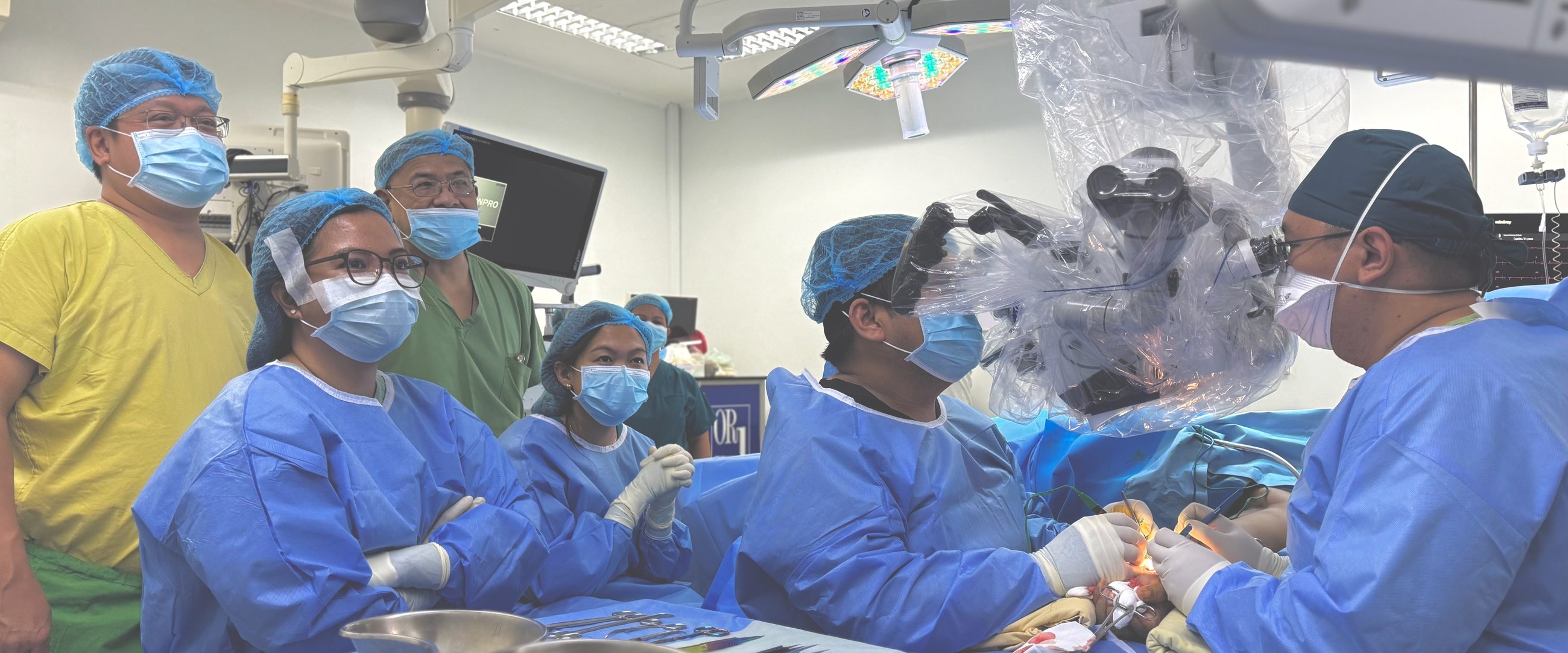
When lymphatic channels are blocked or removed, fluid that should drain away collects in the limb. Compression and therapy manage that; surgery attempts to restore an outflow.
Two microsurgical approaches are used. Lymphaticovenous anastomosis joins blocked lymphatic channels directly to nearby small veins, giving the fluid a route out — the vessels involved are often well under a millimetre across. Vascularised lymph node transfer moves healthy lymph nodes, with their blood supply, into the affected limb. Which is appropriate depends on stage and on what imaging shows, assessed with indocyanine green lymphography and high-frequency ultrasound.
Trained under Dr. Rei Ogawa
Lymphedema surgery was part of Dr. Cruz's year-long fellowship (2024–2025) under Dr. Rei Ogawa at Nippon Medical School, Tokyo, and is now the flagship of the practice, based at St. Luke's Medical Center, BGC. Cases are managed with a multidisciplinary team, including colleagues in oncology, rehabilitation medicine, vascular specialists, and certified lymphedema therapists.
How it runs
Candidacy for any procedure is determined at an in-person consultation, where anaesthesia, duration and recovery specifics are prescribed on a case-to-case basis. Not every procedure suits every patient.