Complex tissue reconstruction
Rebuilding what trauma, tumour removal or infection has taken — moving living tissue, with its blood supply, and reconnecting it under the microscope.
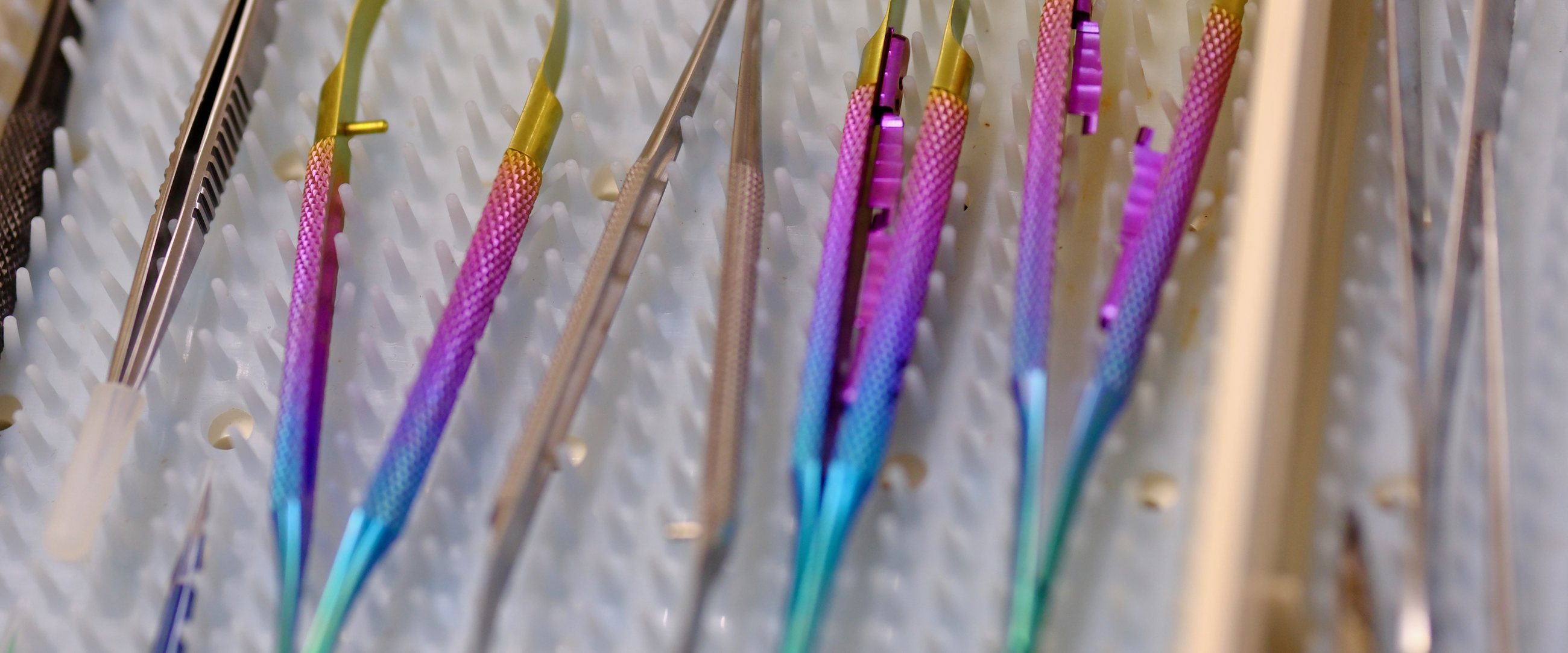
When a defect is too large or too exposed to close directly, tissue is taken from elsewhere on the body along with the artery and vein that feed it. Those vessels are then joined to vessels at the site under an operating microscope, and the transferred tissue lives on its new blood supply.
The choice of donor site is a trade-off — what the reconstruction needs against what the donor area can lose. That reasoning, and the monitoring in the days after surgery when a flap is most at risk, is most of what makes this work succeed.
Microsurgery trained in Tokyo
Free tissue transfer is part of the year-long fellowship (2024–2025) Dr. Cruz completed under Dr. Rei Ogawa at Nippon Medical School, Tokyo, spanning reconstructive surgery and microsurgery.
Two situations account for most of this work. Breast reconstruction, usually following mastectomy, rebuilds the breast using the patient's own tissue, an implant, or a combination of the two — fat grafting is often added afterward to refine contour, and patients who go on to develop lymphedema are managed under the same practice. Lower extremity reconstruction covers defects from trauma, chronic wounds or tumour resection in the leg and foot, where preserving a functional limb usually outweighs any other consideration.
How it runs
Candidacy for any procedure is determined at an in-person consultation, where anaesthesia, duration and recovery specifics are prescribed on a case-to-case basis. Not every procedure suits every patient.